

⏲ Reading time:
🖹 Word count:
For more than two decades as a mentor, I’ve seen the same blockage repeat itself in people who are chasing real success.
👉 Age ⏳
Either you’re too old. Or you’re too young.
In this article, I analyse that belief through my own experience and real success cases, to help you decide whether age is truly a limit… or simply a socially accepted excuse.
By the end of this article, you’ll see age very differently.
🧠 THE COMMON BELIEF
The idea that age is a barrier to achieving ambitious goals is deeply embedded in our society.
It’s rarely expressed as a direct prohibition, but rather through phrases repeated over and over by the environment around those who want to grow.
If you’re over a certain age, you’re “too late”. Common phrases:
- Think about your family if it doesn’t work out.
- It’s not worth risking everything you’ve already built.
- That’s fine for younger people — you need to be practical now.
If you’re under a certain age, it’s “too early”. Common phrases:
- You lack experience.
- Don’t run before you can walk.
- There are more important things than success at your age.
They’re normal phrases. Socially accepted.
And almost all of us have heard them.
I have too!
⚠️ THE REAL MISFOCUS
There’s a very comfortable narrative that says success belongs to a very specific age range.
An idea repeated for years, accepted without question, quietly holding back thousands of people with real potential.
According to this narrative, if you’re past a certain age, you should settle. And if you try too early, you’ll be told you’re too young, too inexperienced, not ready.
Age is used as the explanation because it’s visible, measurable and socially acceptable. But it’s almost never the real cause.
👉 It’s a half-truth that acts as a collective brake.
Not because it’s true, but because the environment can’t — or won’t — see beyond its own limits and comfort.
When you look a little deeper, a different reality appears.
- Fear of failure.
- Fear of not fitting in.
- Fear of making decisions that others don’t understand or support.
👉 In the end, many people accept this narrative because it works like an anaesthetic.
It reduces personal responsibility and turns time into the perfect excuse not to act, even when they know they’re capable of far more.
“It’s not that I can’t,” they tell themselves.
“It’s just not the right time.”
That belief is so normalised that many people stop trying before they even begin.
But what if age isn’t the real problem?
🔓 LATE SUCCESS: The Case of Ray Kroc and McDonald’s
When an ambitious person starts pursuing big goals later in life, it’s rarely out of whim.
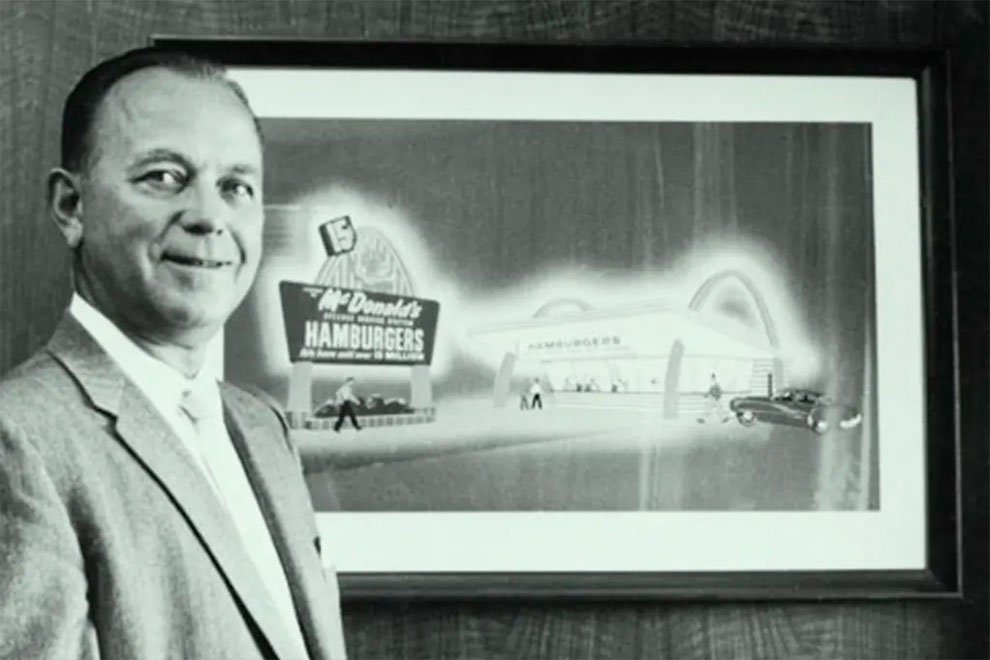
It happens because they no longer accept their current reality. Because the life they have is no longer enough.
Ray Kroc is one of the clearest examples.
- Age 52: He discovers McDonald’s and starts the project without being wealthy, coming from a middle-class position.
- Age 59: He becomes a millionaire when the franchise model takes off and he buys the company.
At 52, he wasn’t a brilliant entrepreneur or an admired visionary.
- He was a salesman.
- Constantly travelling.
- Persisting.
- Surviving.
👉 For decades, he was irrelevant in terms of success. Money barely covered the month.
What changed then?
At a specific moment, he spotted an opportunity others saw as insignificant:
a small burger chain with nothing special on the surface — except for a kitchen system that eliminated waiting times and made the process incredibly efficient.
As a salesman, he was used to waiting long minutes in restaurants.
What he saw in that restaurant felt revolutionary.
What changed wasn’t his age. It was his identity.
He moved from observing to acting.
To do that, he made uncomfortable decisions — the kind most people aren’t willing to make.
When he told his environment he was going to take out a loan and mortgage his house for a second time to buy licences for “just another burger place”, they said he was crazy.
Too risky.
It made no sense at his age.
It wasn’t age that unlocked his success.
It was the decision to take risks when everyone else demanded caution.
Today, McDonald’s operates more than 44,000 restaurants across over 100 countries, generates tens of billions in annual revenue, and holds a market value exceeding $200 billion.
It wasn’t built on extraordinary talent. Nor on anything you couldn’t develop yourself.
👉 It was built on ambition, determination and execution.
He saw an opportunity and went all in.
All of it started when many would have already decided it was too late.
⚡ VERY EARLY SUCCESS: Mark Zuckerberg and Facebook
When someone tries to build something big before the age of 20, the message is almost always the same: wait, don’t take risks, finish what you’re doing — you’ll have time later.
Mark Zuckerberg heard that many times.

In 2004, at 19, he launched an early version of what was then called TheFacebook from a Harvard dorm room.
- He had no capital.
- No influential contacts.
- No business experience.
He didn’t come from a powerful family either. His father was a dentist, his mother a psychiatrist.
An upper middle-class background focused on education, stability and the traditional path: university, a good job, security.
Nothing in his context encouraged dropping out of Harvard to build a company. Yet he did.
👉 By 22, he was already a millionaire.
And in 2008, at 23, he became one of the youngest self-made billionaires in the world as the company grew at an extraordinary speed.
The environment didn’t make it easy. Leaving university was seen as reckless. There were doubts, warnings, and external fears projected onto him.
None of it stopped him.
Not because fear didn’t exist — but because he refused to let other people’s fear define his decisions.
He didn’t try to fit into what was expected of someone his age.
Today, Meta Platforms, the company he co-founded and leads, is one of the most influential companies on the planet, valued at over one trillion dollars, with products used by billions of people every day.
Again, age doesn’t explain the result.
👉 Mindset does.
While others used youth as a reason to wait, he used it as an advantage to act.
🔍 THE COMMON PATTERN
If you compare both cases, one thing becomes clear:
They share neither age, context, nor starting point.
What they share is identity:
👉 The conviction that their goals were realistic and achievable.
👉 Both stopped seeing themselves as victims of their environment.
👉 Both accepted sustained discomfort.
👉 Both made decisions aligned with their vision, not external approval.
Paradoxically, age often works in your favour.
For some, it brings discipline and judgement. For others, room to fail and energy to try again.
Age doesn’t explain results. Your decisions do. 🎯
🧭 CONCLUSION
Time and again, I’ve seen that the real brake isn’t years lived, but the environment and the normalised beliefs that repeat the idea that success is only for a few, under very specific conditions.
👉 As long as you keep acting as the person others expect you to be, you’ll keep getting the results you already know.
I achieved business success very young. I lost it at 35. And I rebuilt everything after 40.
Age wasn’t what made the difference. The way I made decisions did. And above all, how I saw myself — not how others saw me.
👉 That shift in mindset is the difference between seeing success and actually having it. Between understanding what’s possible and doing what’s required.
Real change begins when you accept becoming someone different and taking full responsibility for it — even when it’s uncomfortable and doesn’t fit other people’s expectations.
👉 It’s never too late. And never too early. To go after what you know you’re capable of achieving.
Juan Rex
PS: If age weren’t an issue today, what goal would you pursue right now? 👀