
Mayday. Mayday. Mayday. A business is losing control.

⏲ Tiempo de lectura:
🖹 Número de palabras:
There is a scene that everyone understands.
A plane is about to take off 🛫
Everything seems in order.
But just before the doors close, someone says something critical:
👉 The pilot doesn’t know how to fly 🤦♂️
No one stays to see what happens. No one gives him a chance.
Everyone gets off. 🏃♂️💨
However… that same judgement disappears when we talk about business.
Businesses with potential… that end up crashing.
Not due to lack of effort. But due to lack of control.
👉 I call this The Blind Pilot Theory 📘
Because someone is in charge…
but no one is actually flying with real knowledge.
The problem is not taking off.
The problem starts afterwards 👇
The risk no one sees
In most cases, the start is promising.
There is a clear opportunity. There is demand.
Decisions are made quickly to capture that opportunity.
- The company is created.
- Resources are acquired.
- The team is scaled.
- Tools, vehicles and structure are put in place.
In a very short time, everything is ready.
The plane is built.
And it takes off.
👉 And that is exactly where the problem begins.
A plane is not a simple machine.
It operates through multiple systems at the same time: speed, altitude, fuel, external conditions and procedures.
A business is no different.
Cash flow, processes, operational capacity, delivery quality, customer acquisition and people management.
👉 Everything interacts at the same time.
When you don’t understand how to read that system, decisions are made “blindly”.
👉 And flying blind can work… for a while
Until it doesn’t.
And when that system stops forgiving errors… this happens 👇
When the margin for error disappears (John F. Kennedy Jr. crash)
This pattern is not exclusive to business.
It happens whenever someone underestimates the complexity of a system that requires technical control.
A clear example happened in 1999.
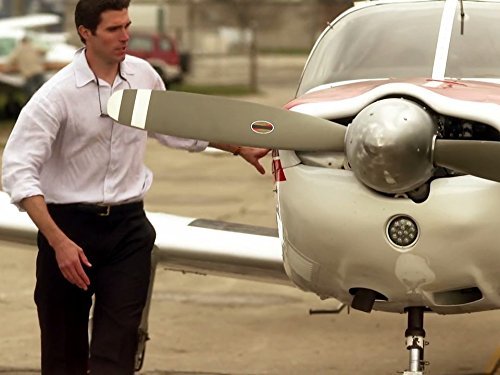
John F. Kennedy Jr. was a pilot.
He had a licence.
He had flown many times.
But he entered a situation where the margin for error no longer existed.
Night conditions.
Low visibility.
No visual references.
👉 In that environment, any deviation is not corrected.
👉 It accumulates.
He took off anyway.
Minutes later, he lost orientation.
The aircraft entered an uncontrolled descent and crashed into the ocean.
It wasn’t bad luck.
👉 It was the moment the system stopped forgiving errors.
And here is the key point:
❌ You don’t need to know nothing to crash.
❌ But knowing just a little isn’t enough either.
✅ You need to know what is required for the situation you are in.
A business works exactly the same way.
You can be in charge for years.
Believe you have everything under control.
Until you enter a level, a phase or a complexity you were not prepared for.
And in that moment, you understand.
It wasn’t a lack of effort.
👉 It was a lack of capability for that context.
And when you realise it…
👉 it’s already too late.
The structural error
The problem is not starting a business.
Starting a business will always involve risk.
👉 The problem is assuming that risk can be managed without preparation.
There is a very common belief that business is learned “by doing”.
And although experience is necessary, many times it only reinforces mistakes.
I have seen entrepreneurs with multi-million contracts, full teams and secured demand go bankrupt in months.
Not because of lack of work.
Not because of lack of opportunity.
👉 But because they didn’t recognise the limits of their own knowledge.
That is where the collapse begins.
When this happens, the reaction is always the same: consume more information.
YouTube, short courses, podcasts… even academic programmes in search of clarity.
But here is the reality:
❌ Consuming content does not teach you how to run a business.
Just like watching The Wolf of Wall Street doesn’t teach you how to invest.
It creates familiarity.
👉 It does not create the ability to execute under time pressure and stress.
And there is another even bigger problem.
After years building companies, acting as CEO, completing two degrees and multiple qualifications, the conclusion is clear:
👉 Much of what is taught is completely outdated for today’s entrepreneur.
Too much depth in concepts that a business owner in 2026 does not need to operate.
A lot of knowledge.
👉 Very little application.
👉 Running a business is not theory. It is execution.
In aviation, no one expects to learn how to fly by watching videos.
But you also don’t need a full academic career to fly a small aircraft.
To fly a Boeing 747, you need years of training.
👉 But 90% of entrepreneurs are not flying a 747.
👉 They are flying a small aircraft.
Simpler.
More manageable.
👉 And yet, they still crash.
Not because of complexity…
👉 But because they lack a practical system.
That is where the difference lies.
👉 You don’t need years of training.
👉 You need a clear, practical methodology focused on what matters:
- What to look at.
- How to decide.
- How to structure.
- How to operate.
👉 A practical approach that allows you, in a short time, to move from improvising to flying with control.
Because in the end, it’s not about knowing more.
👉 It’s about having control.
Practical exercise: Are you flying or improvising?
This exercise is not to motivate you.
👉 It is to give you a clear answer in under 10 minutes.
Part 1: Real control of the business
Without checking documents for more than 5 minutes, answer:
- How much money comes in each month (real, not estimated)?
- How much money goes out (all included)?
- What is your real margin (%)?
- How many months can you operate if no money comes in tomorrow?
👉 If you cannot answer this within 5 minutes → you have no control.
Part 2: Processes
If tomorrow a new person joins your company…
Do you have the processes and documentation needed for them to understand how the business operates without depending on you or someone critical for days or weeks?
- Yes, everything is structured
- Partially, there are things but it’s not enough
- No, it depends completely on people
👉 If it depends on people → you don’t have a system.
👉 And without a system, there is no control.
Part 3: Dependency
Answer this:
If you disappear for 3 days…
- Does the business keep running the same?
- Does it slow down but remain operational?
- Does it stop or break down?
👉 If it stops → you are the bottleneck.
Conclusión
Look.
I started my first business at 15.
And throughout my career, I have seen many people succeed…
and many more fail.
If I had to summarise why, I would always say the same:
👉 Turbulence came… and they didn’t know how to fly.
Because when everything is going well, anyone can fly.
👉 The problem is when it stops going well.
And that is where you see who is in control… and who is not.
As I said at the beginning of the article:
👉 No one would allow a plane to take off without a trained pilot.
Yet in business, this happens every day.
So if you have a business — or are thinking about starting one — here is a clear piece of advice:
👉 Do not treat your business as something you can learn along the way.
Prepare yourself first.
And more importantly, prepare for when things get difficult.
👉 Because that moment always comes.
Running a business is not a hobby.
👉 It is a responsibility.
And if you don’t understand how it works…
You are not building.👉 You are on a countdown 🕒